Is Zillow's Zestimate Accurate for Luxury Homes?
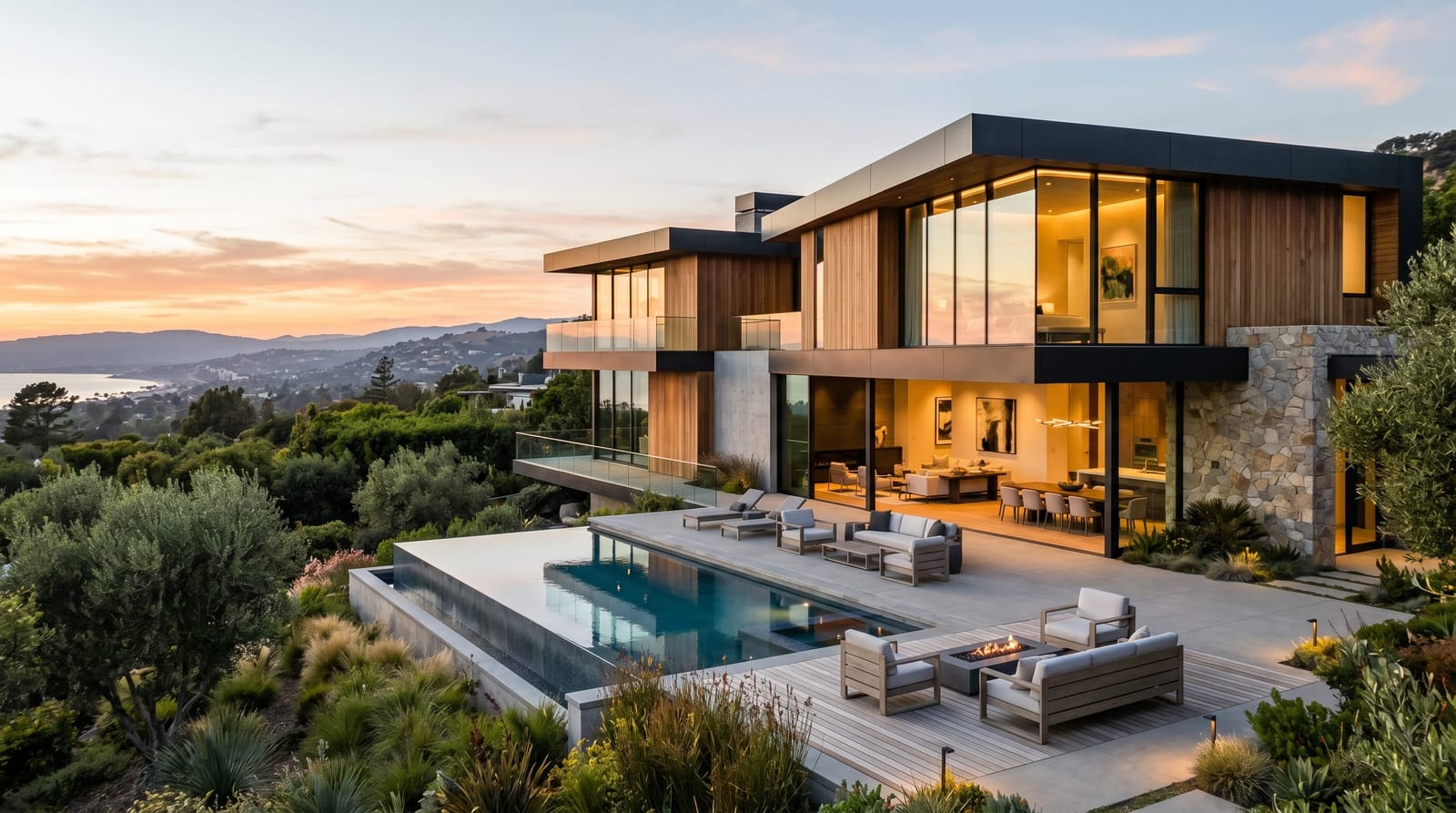
If you've ever typed your address into Zillow and watched a number appear claiming to represent your home's value, you know how tempting it is to take that figure at face value. But when it comes to Zillow Zestimate accuracy for luxury homes, that number deserves serious skepticism. High-end properties present unique challenges that automated valuation tools simply aren't built to handle. Before you price a million-dollar home — or make an offer on one — understanding exactly how Zestimates work, and where they fail, could save you tens of thousands of dollars.
How Does Zillow's Zestimate Actually Work?
The Zestimate is an automated valuation model, or AVM. It uses a machine-learning algorithm that ingests publicly available data — tax records, prior sale prices, listed square footage, number of bedrooms and bathrooms, and historical price trends in a given ZIP code — to produce an estimated market value. Zillow has refined this algorithm significantly over the years and continues to update it with new data inputs.
According to Zillow's own published data, the nationwide median error rate for on-market homes (those actively listed for sale) sits at approximately 1.83%. That sounds impressively precise. For a $400,000 suburban home with dozens of nearly identical comparables sold in the past six months, that accuracy level is plausible. The algorithm has plenty of clean, consistent data to work with.
The problem is that the Zestimate's performance degrades significantly the moment a property becomes harder to categorize. Luxury homes are, almost by definition, harder to categorize.
Why Zillow Zestimate Accuracy for Luxury Homes Falls Short
Zillow's algorithm depends on comparable sales — homes similar enough in size, condition, location, and features that their sale prices can be reasonably used to estimate the subject property's value. In a standard subdivision, comparables are plentiful. In the luxury market, they're scarce.
Consider a custom-built estate on five acres with a guest house, a wine cellar, a private pond, and a home theater. There may be only two or three remotely similar properties that have sold within a reasonable radius in the past year. Zillow's algorithm has very little to anchor its estimate to. The result is a much wider margin of error.
According to research data, the median error rate for off-market homes nationally is around 7%. For luxury and unique properties, that error can climb significantly higher. A 7% margin of error on a $2 million home translates to a $140,000 swing in either direction — a gap that could derail negotiations, cause appraisal issues, or simply result in a seller leaving substantial money on the table.
Wesley Kang, founder of Realtor 1099 Cafe, put it plainly: automated valuation tools like Zillow "can't grasp what actually matters to wealthy buyers." The features that drive premium pricing in the luxury segment — architectural pedigree, the quality of finishes, privacy, views, smart home integration, the reputation of the builder — are invisible to an algorithm reading tax records and square footage data.
The Specific Features Algorithms Can't Measure
The gap between what a luxury home is truly worth and what Zillow reports often comes down to qualitative factors that don't appear in public data. These include:
- Quality of construction and finishes: An algorithm can record square footage, but it can't distinguish between builder-grade materials and imported Italian marble or hand-crafted millwork.
- Lot positioning and views: Two homes on the same street may have vastly different values because one backs to a golf course fairway and the other faces a utility easement. The Zestimate treats them as near-identical.
- Outdoor living and amenity spaces: A resort-quality pool and spa, an outdoor kitchen, or a sports court add meaningful value that AVMs frequently miscalculate. (Understanding how specific amenities like pools affect appraised value is worth exploring in detail — something we cover in a related post on whether a swimming pool adds value to a home.)
- Privacy and access: A gated, private drive in an exclusive enclave commands a premium. The algorithm sees an address, not a lifestyle.
- Renovation quality: A recent gut renovation using top-tier designers and contractors may add $500,000 in value. Unless a permit was pulled and the square footage changed, Zillow may not register any of it.
These aren't minor details. In the luxury segment, they are often the entire justification for the price.
On-Market vs. Off-Market: A Critical Distinction
One nuance worth understanding is that Zestimates do become more accurate once a home is actively listed for sale. When Zillow can factor in the actual listing price, open house traffic, and how long a home has been on the market, the algorithm recalibrates. The median error rate for on-market homes drops to that 1.83% figure mentioned earlier.
But here's the problem: by the time a home is listed, the Zestimate's accuracy improvement is largely irrelevant to pricing strategy. Sellers need to know what their home is worth before they list — so they can set the right asking price from day one. Overpricing a luxury home, even briefly, creates market stigma that is notoriously difficult to recover from. Price reductions in the luxury segment signal weakness and invite lowball offers.
Relying on an off-market Zestimate to set your initial list price introduces unnecessary and costly uncertainty.
What Luxury Sellers Should Use Instead: The Professional CMA
A Comparative Market Analysis (CMA) conducted by an experienced luxury real estate professional is fundamentally different from an AVM. A skilled agent doesn't just pull comparable sales from an MLS database — they apply informed judgment about why one sale is or isn't truly comparable, they account for the qualitative features an algorithm misses, and they understand the current psychology of buyers in your specific price bracket.
For a luxury property, a thorough CMA process typically includes:
- Physical walkthrough and assessment: An agent visits the property to observe condition, finishes, flow, and lifestyle features firsthand.
- Curated comparable selection: Rather than relying on automated comp-pulling, the agent hand-selects the most relevant recent sales and explains why each is or isn't a strong comparison.
- Adjustment analysis: Differences between the subject property and each comparable are weighted and adjusted for — accounting for things like a superior view, a renovated kitchen, or additional acreage.
- Absorption rate review: How many luxury homes in this price range are currently on the market, and how quickly are they selling? This supply-demand context shapes pricing strategy as much as the comparables themselves.
- Positioning recommendation: A final price range recommendation that reflects both the data and the current market narrative for your home.
This is the kind of nuanced analysis that positions a luxury home correctly from day one — and that no algorithm can replicate.
Frequently Asked Questions
What is the typical error rate for Zillow Zestimates on luxury homes?
Zillow's published median error rate for off-market homes nationally is approximately 7%. For luxury homes — which have fewer comparable sales and more unique features — the error rate is often higher. On a $2 million property, even a 7% error represents a $140,000 variance, which can significantly impact pricing decisions and negotiations.
Is a Zestimate ever useful for luxury home sellers?
A Zestimate can serve as a very rough starting point for initial curiosity, but it should never be used to set an asking price for a luxury home. It lacks the ability to account for custom finishes, lot quality, privacy, renovation quality, and other premium features that drive value in the high-end market. Always rely on a professional CMA for actual pricing decisions.
Why does the Zestimate become more accurate once a home is listed?
Once a home is actively listed, Zillow can incorporate the actual listing price and market activity data into its algorithm, which causes it to recalibrate closer to the list price. The on-market median error rate drops to around 1.83%. However, this accuracy improvement happens after you've already committed to a price — making it too late to be useful for initial pricing strategy.
Should buyers use Zestimates when evaluating luxury homes?
Buyers should treat Zestimates as general background context, not as reliable valuations for luxury properties. A home priced at $3.5 million with a Zestimate of $3.1 million doesn't necessarily mean it's overpriced — the gap may reflect premium features the algorithm couldn't capture. Buyers should work with an experienced agent and request a professional analysis before drawing conclusions from an AVM.
The Bottom Line on Zillow Zestimate Accuracy for Luxury Homes
Zillow Zestimate accuracy for luxury homes is genuinely limited — not because Zillow's technology is poorly built, but because automated algorithms are structurally ill-equipped to handle low-comp, high-variability properties. The features that make a luxury home worth $3 million instead of $2.2 million often exist in dimensions that public records don't capture. For sellers preparing to list a high-value property, a professional CMA from a knowledgeable luxury market expert is not optional — it's the foundation of a sound home pricing strategy. Getting that number right from the start protects your equity and your timeline.