What Factors Determine the Value of a Luxury Home?
When you're trying to understand what your home is worth, the answer involves far more than square footage and bedroom count. That's especially true in the luxury market, where pricing is as much an art as it is a science. Million-dollar properties are evaluated through a unique lens — one where prestige, exclusivity, and experience carry just as much weight as comparable sales data. If you're preparing to sell a high-end home, or simply want to understand what makes certain properties command top dollar, this guide breaks down the key value drivers that matter most. Understanding these factors not only helps you set realistic expectations, but it also helps you make smarter decisions about where to invest your time and money before listing.
Location and Neighborhood Prestige
In real estate, location has always been the foundational driver of value — and in the luxury market, it carries even more weight. Buyers spending significant sums aren't just purchasing a home; they're purchasing a lifestyle, a zip code, and a community. The prestige associated with a particular neighborhood, street, or gated enclave can add hundreds of thousands of dollars to a property's value, sometimes without any change to the home itself.
What Makes a Location "Prestigious"?
Several factors contribute to neighborhood prestige at the luxury level:
- Proximity to cultural and social hubs — Fine dining, private clubs, art galleries, marinas, and upscale retail corridors all contribute to a sense of place that luxury buyers seek.
- Low crime and high privacy — Safe, quiet, and discreet neighborhoods are highly desirable. Gated communities and private streets add a layer of exclusivity that resonates strongly with high-net-worth buyers.
- Established reputation — Some neighborhoods simply carry a name that speaks for itself. Buyers know them, trust them, and are willing to pay for the association.
- School district quality — Even buyers without children in the home often consider school district ratings because they directly affect long-term resale value. A home in a top-rated district consistently outperforms comparable homes in lower-ranked districts.
Location is the one thing you truly cannot change about a property. It's worth understanding clearly how your home's location stacks up before setting a price.
Views, Lot Attributes, and Outdoor Living
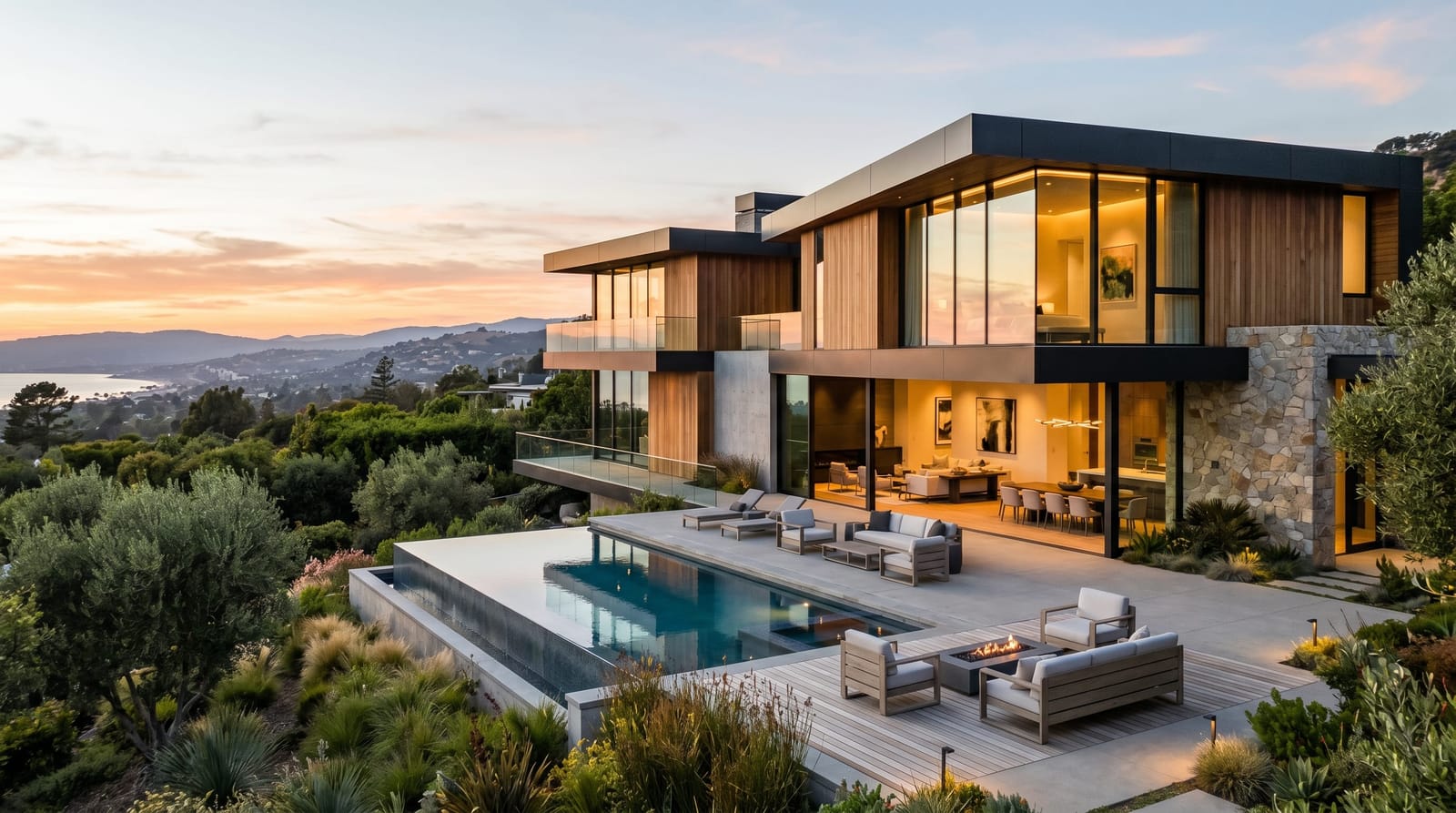
In luxury real estate, what surrounds the home matters enormously. A sweeping ocean view, a private lakefront setting, or a hillside perch overlooking a city skyline can significantly increase a property's value beyond what interior features alone can justify. These attributes are rare, and scarcity is one of the most powerful pricing forces in the high-end market.
Lot Features That Drive Value
- Views — Unobstructed water, mountain, golf course, or city views can add 10–25% or more to a home's value depending on the market.
- Lot size and usability — Larger lots with flat, functional space are highly sought after, especially when they allow for privacy landscaping, sport courts, or guest structures.
- Waterfront or water access — Direct access to water — whether ocean, river, or lake — is one of the most consistently valued lot attributes in luxury real estate.
- Privacy and setback — Distance from neighbors, natural buffers like mature trees, and thoughtful orientation all contribute to the sense of seclusion that many luxury buyers prioritize.
Outdoor living spaces have also grown considerably in importance. High-quality pool and spa areas, outdoor kitchens, fire features, and covered entertaining patios are now expected at the luxury level. If you're wondering specifically whether a swimming pool adds home value in your market, the answer depends largely on region, buyer expectations, and the quality of the installation.
Architectural Quality and Design Distinction
Luxury buyers are sophisticated. They recognize quality construction, and they're drawn to homes that have a clear design identity. A home designed by a notable architect or built with custom craftsmanship tells a story — and stories sell at the high end of the market.
What Appraisers and Buyers Look For
Architectural quality encompasses several dimensions:
- Structural integrity and build quality — Luxury buyers and their inspectors scrutinize construction standards carefully. Homes built with superior framing, insulation, and foundational work hold value better over time.
- Design coherence — A home that flows well, makes sense spatially, and reflects thoughtful design decisions commands more than one that feels assembled without intention.
- Unique or iconic design elements — Grand entries, soaring ceilings, dramatic staircases, and custom millwork are the kinds of architectural moments that make a home memorable and photographable — both of which matter in today's market.
- Historical or pedigree value — In some markets, a home designed by a recognized architect carries provenance value similar to fine art. Knowing your home's design history can be a genuine selling advantage.
A skilled appraiser working in the luxury segment will factor design quality into their assessment, but it's also important to work with a real estate professional who understands how to communicate these attributes to discerning buyers. Speaking of appraisals, understanding how real estate appraisals work and why they matter for sellers is a valuable piece of the pricing puzzle — particularly for properties without many direct comparables.
Interior Finishes, Upgrades, and Functional Amenities
At the luxury level, buyers expect premium finishes as a baseline — the question is whether your home's finishes are simply adequate or genuinely exceptional. The difference between "nice" and "extraordinary" is reflected in price, especially in a competitive market.
High-Value Interior Features
- Kitchen quality — Professional-grade appliances, custom cabinetry, natural stone countertops, and butler's pantries remain among the highest-return upgrades in luxury homes.
- Primary suite experience — Spa-inspired bathrooms, generous closet systems, and a sense of retreat within the primary suite are non-negotiables for luxury buyers.
- Flooring and surfaces — Wide-plank hardwood, imported stone, and specialty tile communicate quality instantly. Dated or inconsistent flooring drags down perceived value even in otherwise excellent homes.
- Smart home integration — Whole-home automation, integrated audio/visual systems, advanced security, automated lighting and climate control, and EV charging infrastructure have shifted from optional upgrades to expected features at the luxury tier. A home that lacks these systems may feel outdated to tech-savvy buyers.
- Home office and wellness spaces — Dedicated home office spaces, home gyms, wine cellars, and home theaters have become meaningful value contributors as buyer priorities have evolved.
Not every upgrade yields the same return. Some improvements are expected by buyers and simply allow you to compete — they won't necessarily increase your price, but their absence can hurt it. A well-informed pricing strategy accounts for this distinction.
Privacy, Security, and Exclusivity
For many luxury buyers, privacy isn't a bonus feature — it's a primary motivation. High-net-worth individuals often place significant value on properties that offer genuine seclusion, discretion, and security. This is one area where luxury real estate diverges meaningfully from the broader market.
Privacy Features That Matter to Buyers
- Gated entry and controlled access — Whether the home is part of a gated community or has its own private gate, controlled access is a strong selling point.
- Natural and designed privacy screening — Mature hedgerows, privacy walls, and thoughtful landscaping that shields the home from neighboring sightlines add tangible value.
- Lot depth and road setback — Homes that sit well off public roads, with long driveways that buffer the residence from outside view, are consistently valued at a premium.
- Security systems and technology — Professionally monitored, state-of-the-art security systems — including camera networks, smart locks, and perimeter monitoring — are highly valued at this price point.
Interestingly, privacy can be difficult to quantify in a traditional appraisal, which is part of why pricing luxury properties well requires human expertise, not just algorithms. This is also one of the reasons why Zillow's Zestimate often struggles with accuracy for luxury homes — automated tools simply can't weight these nuanced attributes properly.
Market Conditions and the Limits of Comparables
Even the most exquisite property is subject to the realities of the market. Luxury home values don't exist in a vacuum — they're shaped by economic conditions, buyer demand, inventory levels, and interest rate environments at any given time. Understanding where the market stands when you're ready to sell is just as important as knowing the quality of your home.
Why Luxury Comps Can Be Misleading
In standard real estate, comparable sales (comps) are the backbone of pricing. In the luxury market, true comparables can be rare — sometimes nonexistent. When every home is custom and features vary dramatically, it becomes much harder to say with confidence that "this home sold for X, therefore yours is worth Y."
This is precisely why learning how to use a comparative market analysis to price your home correctly — and understanding its limitations in the luxury segment — can be one of the most valuable things a seller does before listing. It's also why the danger of overpricing your home is particularly real at the top of the market, where buyer pools are smaller and days on market can signal stigma quickly.
Pricing a luxury home well means blending data with deep market knowledge, intuition about buyer psychology, and honest assessment of where your property stands relative to the competition.
A Few Related Topics Worth Exploring
If you're diving deeper into what determines your home's value, a few specific questions come up often. Does a finished basement count the same as above-grade square footage? How much does a home's age affect value when it's been meticulously maintained? These details matter and are worth exploring as you build a complete picture of your home's worth.
The Bottom Line on Luxury Home Value
Understanding what determines luxury home value is the foundation of a confident, effective pricing strategy. Location prestige, lot attributes, architectural quality, interior finishes, privacy features, and smart home technology all play meaningful roles — but none of them exist in isolation. The most successful luxury sellers are the ones who take an honest, informed look at all of these factors together before deciding on a price.
If you'd like to talk through where your home stands across these value drivers, I'd be glad to walk through it with you. A thoughtful conversation early in the process can save a lot of stress — and money — later on. Reach out to get started with a personalized market consultation.