Do I Need a Virtual Tour When Listing My Home for Sale?
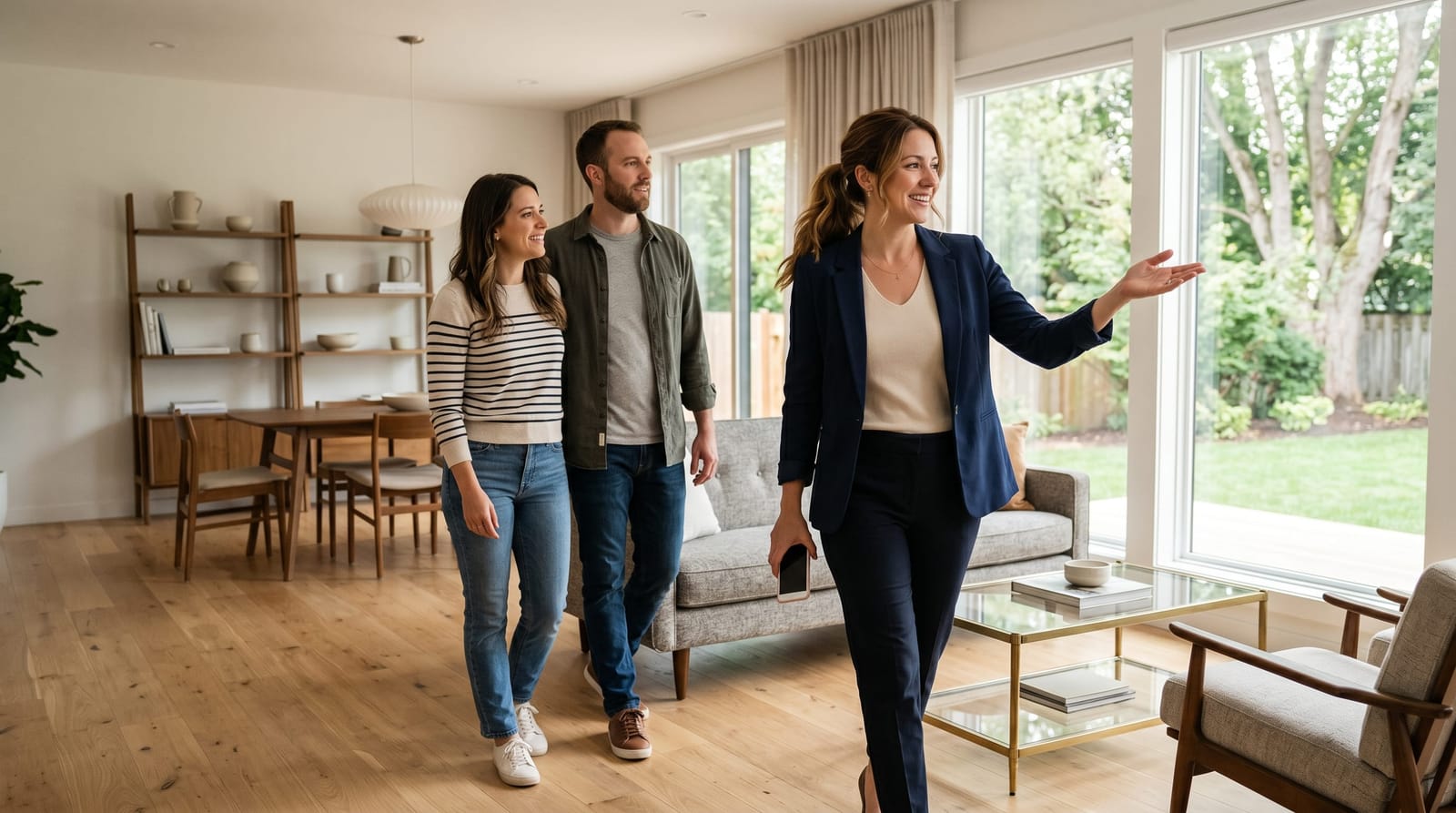
When preparing a home for sale, most sellers focus on photography, staging, and pricing — and virtual tours often get treated as an optional add-on. But buyer behavior has shifted dramatically, and for mid-to-high-value properties especially, a virtual tour home listing is no longer a nice-to-have feature. It's a strategic tool that filters out low-intent buyers, attracts serious remote prospects, and can meaningfully shorten your time on market. Here's what the data says, and how to decide whether a virtual tour belongs in your listing strategy.
What Has Changed About How Buyers Search for Homes
The way buyers interact with home listings has fundamentally changed over the last several years. Before making a single phone call or scheduling a showing, today's buyers spend significant time researching online — comparing properties, exploring neighborhoods, and narrowing their shortlist. A virtual tour home listing gives those buyers the ability to "walk through" a property at midnight on a Tuesday without requiring you to prep your home for a showing.
According to data from the National Association of Realtors, over 95% of buyers use online tools during their home search, and listings with interactive or video content consistently generate more engagement than static photo-only listings. Buyers who engage with a 3D virtual tour spend an average of three to six times longer on a listing page compared to those who only view photos. That extended engagement signals serious interest — not casual browsing.
For sellers, this matters because longer engagement correlates with higher showing-to-offer conversion rates. A buyer who has already "toured" your home virtually and returns to schedule an in-person showing is far more likely to make an offer than someone who clicks through twelve photos and moves on. The virtual tour acts as a pre-qualification step, and that's a meaningful efficiency gain in any market.
Why Virtual Tours Are Especially Valuable for Luxury and High-Value Listings
If your property is priced above the local median — and especially if it crosses into the luxury tier — a virtual tour home listing becomes even more critical. Here's why: buyers at higher price points often have complex schedules, are relocating from out of state or internationally, and will not commit to booking a flight or clearing a weekend for a showing based on photos alone.
A professionally produced 3D virtual tour, ideally built using Matterport or a comparable platform, lets a buyer in New York or London walk through your listing in real time. They can measure rooms, explore the flow between spaces, and evaluate the property with a level of depth that static images simply cannot provide. For international buyers in particular, the virtual tour home listing may be the only way they experience your property before making an offer — or asking their local representative to schedule a viewing on their behalf.
Beyond geography, virtual tours also communicate a listing's quality and the seller's seriousness. A luxury property presented with a full 3D virtual tour, professional photography, and detailed floor plans signals that the seller and their agent have invested in the presentation. That perceived investment influences how buyers perceive the property's value before they ever step inside.
How Virtual Tours Reduce Unnecessary Showings
One of the least-discussed benefits of a virtual tour home listing is what it eliminates: low-quality showings. Every time a buyer tours your home in person, you need to vacate the property, ensure it's staged and clean, and accept the disruption to your schedule. When that showing produces no serious interest, it's a cost — your time, your energy, and potentially your motivation.
Virtual tours act as a filter. A buyer who has already explored your floor plan virtually and watched the sun hit the kitchen at a certain angle has done the due diligence that used to happen during an in-person tour. If they still want to schedule a showing after the virtual tour, they're coming with purpose. Sellers who have used virtual tours consistently report that the in-person showings they do receive tend to be more focused conversations — buyers asking specific questions rather than exploring whether they like the layout.
This dynamic is worth considering alongside a related question that many sellers wrestle with: understanding how many showings to expect before receiving an offer. Virtual tours change that number by compressing the early-stage filtering into the online experience rather than your living room.
What Does a Professional Virtual Tour Cost — and Is It Worth It?
Professional 3D virtual tours typically cost between $200 and $500, depending on the size of the property and the provider. Many professional photographers bundle virtual tours with high-resolution photo packages and floor plans, making the combined investment highly cost-effective when you consider what it delivers. Some listing platforms, including Zillow, offer a free 3D Home tour option through their mobile app, which gives sellers a lower-cost entry point — though professionally produced tours with Matterport-style technology generally offer a higher-quality result for premium listings.
For a home priced at $600,000 or above, spending $300 on a virtual tour as part of your virtual tour home listing strategy represents a fraction of a percentage point of your sale price. The more relevant calculation is what that investment returns: more qualified showings, broader geographic reach, and stronger buyer engagement. When evaluated that way, it's rarely a question of whether the cost is justified — it's a question of which platform and provider will best serve your specific property and buyer pool.
- Matterport 3D tours — Best for luxury and architectural properties; produces a fully navigable 3D model
- Zillow 3D Home app — Free to use; good for mid-range listings and quick production timelines
- 360-degree photo tours — Lower cost alternative ($200–$350); less immersive but still far better than photos alone
- Video walkthroughs — Often paired with virtual tours; useful for social media distribution but not a substitute for interactive 3D
When a Virtual Tour May Be Less Critical
Virtual tours are not universally necessary for every listing. For entry-level properties in high-demand local markets where inventory is extremely tight, buyer competition may be intense enough that homes go under contract with minimal online engagement. In those scenarios, professional photography often does the heavy lifting, and a virtual tour — while still a positive — may not move the needle significantly on outcome.
Similarly, if your target buyer is primarily local and highly familiar with the neighborhood, the geographic reach argument for virtual tours carries less weight. That said, even in competitive local markets, the virtual tour home listing advantage of filtering showings and extending time-on-listing-page still holds. The question becomes whether that efficiency is worth the investment given your specific property and timeline.
In most cases, for properties priced above $400,000 or with distinctive architectural features, the answer is yes.
Frequently Asked Questions
Does a virtual tour actually help sell a home faster?
Research and agent experience both suggest yes, particularly for properties with a broad or geographically dispersed buyer pool. Virtual tours increase listing engagement, attract out-of-state and international buyers who might otherwise skip the property, and filter in-person showings to more serious prospects — all of which can contribute to a faster, cleaner sale process.
Can I create a virtual tour myself, or do I need a professional?
Tools like the Zillow 3D Home app allow sellers and agents to create basic virtual tours using a smartphone, and these work reasonably well for mid-range listings. For luxury or high-value properties, a professionally produced Matterport tour is strongly recommended. The quality difference is visible, and for a buyer considering a million-dollar property, production quality influences perceived property value.
Will a virtual tour replace the need for in-person showings?
Not entirely — most buyers will still want an in-person visit before submitting an offer. What the virtual tour does is change who shows up for that visit. Buyers who have already toured virtually are more engaged, more informed, and more likely to move forward. Think of it as raising the floor on showing quality rather than eliminating showings altogether.
Should my real estate agent include a virtual tour in their listing package?
For mid-to-high-value properties, yes — this should be a standard part of professional listing services, not an upsell. If an agent doesn't include or offer virtual tour production in their listing process, it's worth asking why, and whether their overall marketing approach aligns with how today's buyers actually search for homes.
The Bottom Line on Virtual Tours for Home Listings
A virtual tour home listing is one of the most practical and high-return investments a seller can make in their marketing strategy. It broadens your buyer pool to include out-of-state and international prospects, increases the quality of in-person showings by pre-qualifying buyers, and positions your listing as a premium, professionally presented property. For homes above the local median price — and especially for luxury properties — skipping the virtual tour is leaving a meaningful competitive advantage on the table. When you're ready to think through your full listing strategy, explore our complete seller's guide for a step-by-step framework covering every stage of the process.